
Criminal Cases in Mercer County Courts
Mercer County criminal cases split at the court level. The Superior Court of New Jersey, Law Division, Criminal Part hears indictable offenses in Vicinage 7. Its public-facing criminal courthouse is at 400 South Warren Street in Trenton. A complaint may start in a municipal court, but the Mercer County Prosecutor screens indictable charges before grand-jury action, accusation, diversion, dismissal, or a return to municipal court.
Municipal courts keep disorderly-persons, petty-disorderly-persons, ordinance, and traffic matters within their authority. Venue matters. Trenton, Hamilton, and Ewing each hold their own municipal files, so a person must search the court where the complaint was filed. The County Clerk is not the custodian for Judiciary criminal files. Mercer Criminal Division handles Superior Court case questions at 609-571-4070, while the vicinage main line at 609-571-4200 can route public access, archive, ADA, interpreter, and division needs.
Mercer's court sites also serve different roles. The Criminal Courthouse holds the public-facing file path for indictable matters, while the Civil Courthouse at 175 South Broad Street supports other vicinage services. The jail is miles away in Hopewell Township. That split explains why Corrections can answer a custody question but cannot supply the later plea, judgment, or sentence from a Mercer County court case.
Mercer County Court Case Portal
The official NJ Courts Find a Case page routes a searcher to separate systems by case family. It is not one universal name box. Choose the criminal path for Superior Court records or the municipal path for a known lower-court complaint. A case number is the strongest key. Names can collide, and a county filter alone may not distinguish two people with similar details.
The NJ Courts source page shows how public searches branch by court type.
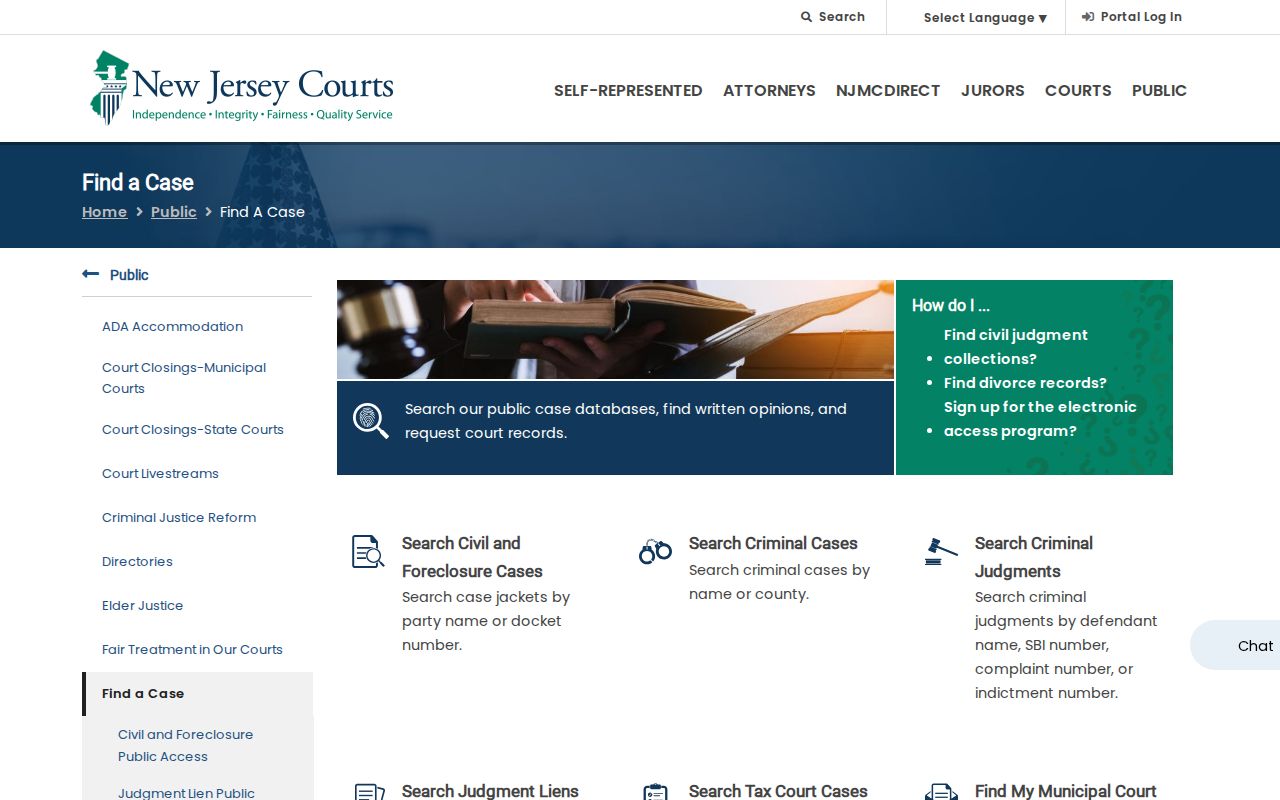
That branching point is why the record type and venue should be known before any Mercer County case lookup begins.
How to Search Case Records
Use known identifiers and inspect each charge count. A case header may say disposed while individual counts ended in different ways. The official search also may omit a document that can still be inspected or copied through Mercer Criminal Division.
- Open Find a Case and select the criminal or municipal system that fits the charge.
- Enter the case or complaint number when known. Otherwise use the defendant name and narrow the venue to Mercer County.
- Confirm the match with the filing date, municipality, statute, degree, and any lawful age detail shown.
- Open the docket and read every count, event, hearing, and count-level disposition.
- Ask Mercer Criminal Division or the correct municipal clerk for public copies, certified records, or an archived file that is not downloadable.
| Field Label | Type | Required | Notes |
|---|---|---|---|
| Search type or case system | Links or tabs | Yes | Criminal and municipal records follow different paths |
| Case number | Text | Alternative | Best match key when its format is known |
| Party or defendant name | Text | Alternative | Confirm common names against other case facts |
| County | Dropdown | Varies | Select Mercer when the system offers the filter |
| Court or division | Dropdown | Optional | Distinguishes Criminal Part from municipal venue |
| Filing range | Date controls | Optional | Availability differs among interfaces |
Note: Portal labels and availability can change, so use the live Judiciary controls and call the clerk when the search fails.
Mercer County Municipal Case Paths
The Municipal Court Case Search works best when a ticket or complaint is already in hand. Its paths ask for items such as Court ID, prefix, ticket number, license plate number, or an exact case or complaint number. It is not designed as a broad public history search. A no-match can mean the wrong municipality or incomplete identifying data, not that no Mercer County court record exists.
The official municipal search screen shows the identifying fields required for this narrower inquiry.
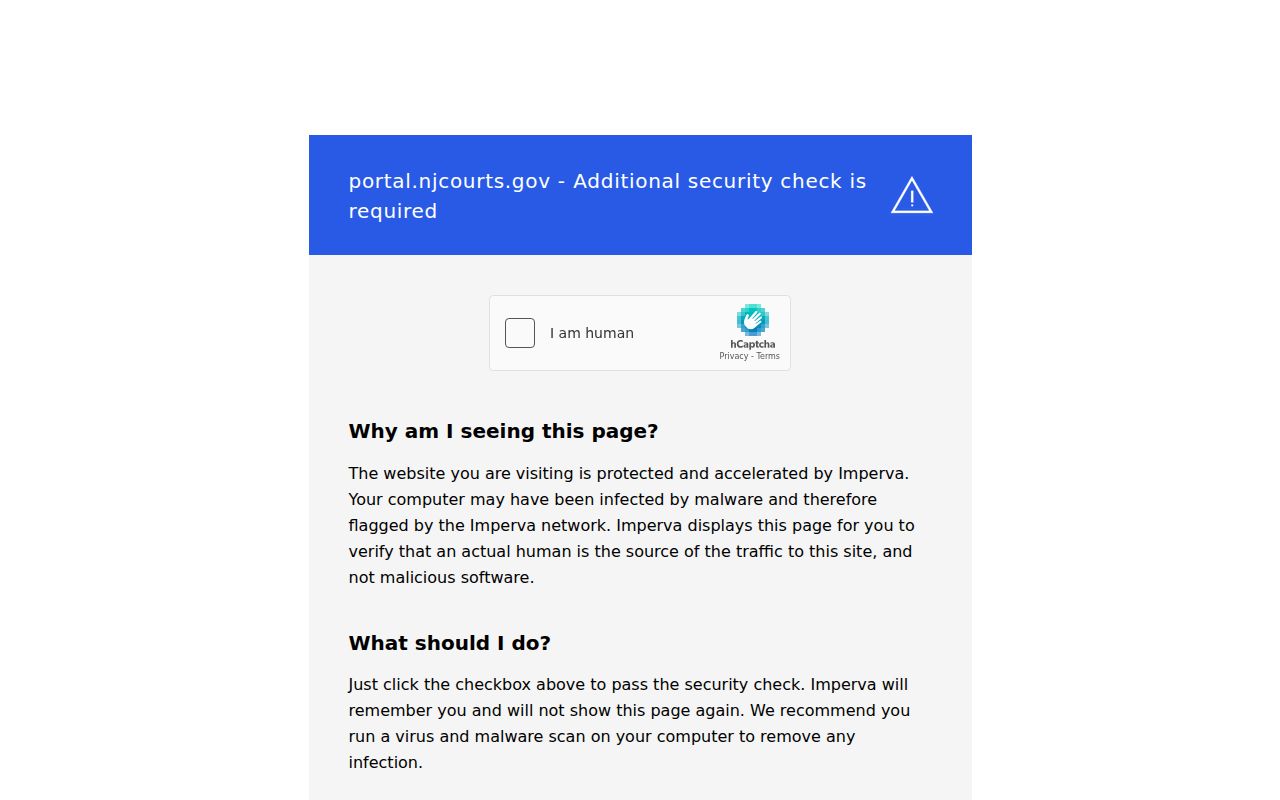
Use the complaint itself to find the Court ID and number, then contact that municipal clerk if the online result remains unclear.
Search every plausible venue when the municipality is uncertain. An indictable complaint can begin in municipal court before moving to Superior Court, and a downgraded count can travel back. A single Mercer County case may therefore leave related entries in both systems without either entry serving as a full fingerprint-linked history.
What the Case File Shows
A Mercer County criminal case file follows the allegation after it reaches court. It can show which charges were filed, what happened at hearings, how each count ended, and what sentence followed. Some fields appear as docket data even when the underlying pleading cannot be downloaded.
| Case Number & Court | The complaint, indictment, or case identifier and the municipal or Superior Court venue |
|---|---|
| Charging Document | The complaint, accusation, or indictment that states the filed counts and cited New Jersey laws |
| Docket Entries | Filed events such as first appearance, grand-jury action, motions, conferences, plea, trial, and judgment |
| Hearing Dates | Scheduled date, time, location, and judge when those details are public and current |
| Disposition & Judgment | The result for each count, including conviction, acquittal, dismissal, or downgrade and remand |
| Sentence & Conditions | Custody, probation, restitution, financial obligations, and other public terms imposed by the court |
A filed case is not a full NJSP rap sheet. The latter joins fingerprint-linked cycles from across New Jersey and has tighter access rules.
Read Mercer County Case Counts
Read each count instead of stopping at the Mercer County case header. An indictable charge may be dismissed while another count results in a plea. It may also be downgraded and remanded to municipal court. That means the Superior Court docket and the municipal follow-on record may both be needed to understand the final result.
- Disposition
- The outcome assigned to a count or case.
- Dismissal
- A charge ended without a conviction, subject to the reason and terms stated by the court.
- Downgrade and remand
- An indictable charge returned to municipal court as a lower-level matter.
- Accusation
- A formal charging instrument used when indictment is waived as the law permits.
- No bill
- A grand-jury decision not to indict a charge presented for review.
When a statewide personal record lacks the Mercer County disposition, obtain the certified court outcome and use the New Jersey State Police correction process for the subject's own record.
Stages of a Criminal Case
A Mercer County criminal case can change shape before arraignment. The prosecutor may seek an indictment, proceed by accusation where allowed, divert an eligible matter, dismiss it, or send a lower charge back to municipal court. New Jersey uses a risk-based pretrial release and detention system. A detention order deals with custody while the matter is pending and is not a finding of guilt.
Case flow: Charges Filed › Arraignment › Pretrial › Plea or Trial › Disposition › Sentencing
Before arraignment, the complaint passes through prosecutor review and, for an indictable track, grand-jury or accusation procedures. Pretrial conferences, discovery, and motions follow. A plea or trial resolves the counts before judgment and sentence. Appeal and post-conviction filings can add later entries. Hearing schedules and judge assignments can change, so the live Mercer County docket and court calendar are more reliable than an old printed list.
Mercer County Court Case Levels
New Jersey does not label offenses as felonies and misdemeanors in its statutes. It calls felony-equivalent offenses crimes of the first through fourth degree. Disorderly-persons and petty-disorderly-persons offenses are lower matters heard in municipal court. The label helps identify where to look, but it does not predict the result or establish guilt.
The Mercer County Prosecutor's Office screens indictable complaints and presents grand-jury matters. Local municipal prosecutors handle matters that remain in municipal court. If an intake charge later changes, use the docket's statute, degree, and count-level outcome rather than the early booking label.
Mercer County Specialty Court Entries
Recovery Court, formerly called Drug Court, and pretrial intervention are named New Jersey pathways that may appear in a Mercer County docket. A municipal conditional dismissal can appear in an eligible lower-court case. An application or referral is not itself a final outcome. Only the entered order and later docket events show whether the person entered, completed, or left a program.
The Mercer Vicinage page is the best current source for facility and division contacts.
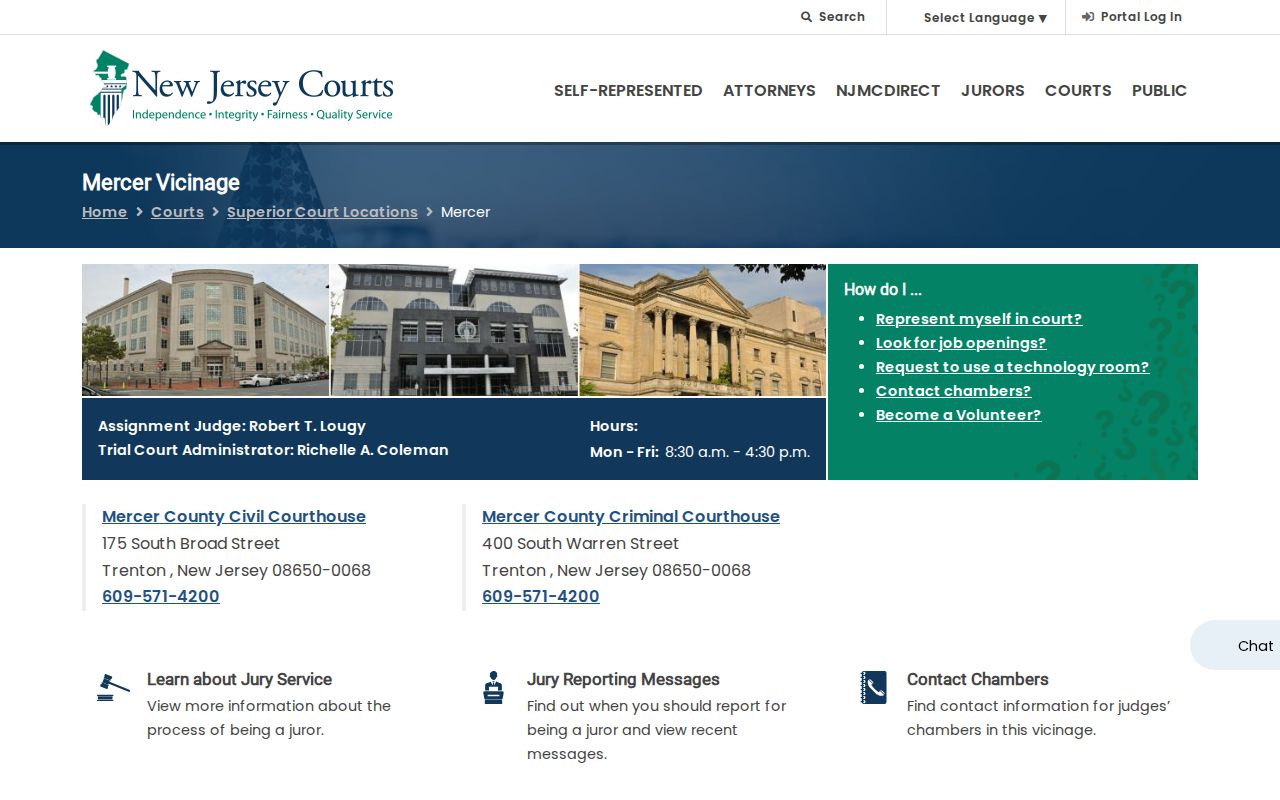
The live vicinage listing also helps prevent a trip to the Civil Courthouse when the criminal file is held at South Warren Street.
Access & Restrictions
New Jersey Court Rule 1:38, rather than ordinary county OPRA procedure, governs Judiciary records. The rule begins with public access but permits exclusions, sealing, and redaction. Presentence reports, grand-jury material, unfiled discovery, juvenile records, expunged matters, victim identifiers, full personal identifiers, and protected medical or security information are not open merely because a public docket exists.
Online access can be narrower than counter access. Ask Mercer Criminal Division whether a public paper or archived file exists when the portal shows no download. The clerk can explain the current record process, but cannot create a new report or supply legal advice. Courthouse visitors should also expect screening by the Mercer County Sheriff's Office.
If a record is withheld or redacted, ask which rule, statute, or order controls the limit. A missing online document may still be public at the counter, but that possibility does not override a seal. NJ Courts also provides interpreter and accessibility channels through the vicinage, which is useful in a county where many residents speak a language other than English at home.
Note: Never treat a pending charge, pretrial detention decision, or arrest entry as proof that a person was convicted.